

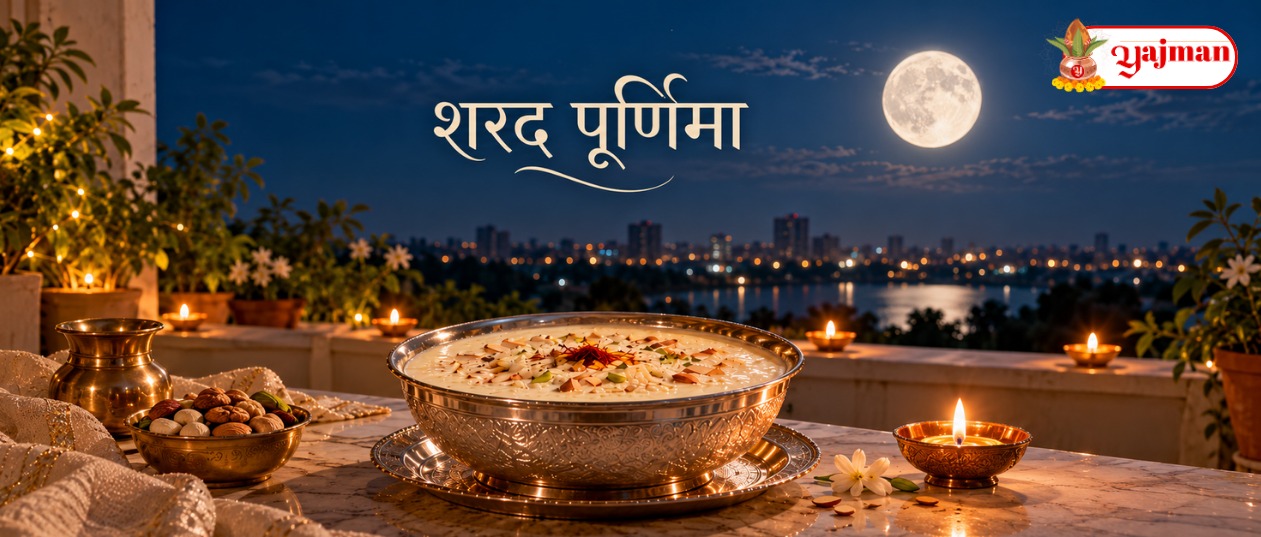
Sharad Purnima, observed on the full moon day of the Hindu lunar month of Ashwin, is one of the most auspicious nights in the Vedic calendar. According to ancient astrological and spiritual traditions, this is the only night of the year when the moon shines with all sixteen divine attributes, known as Kalas. It is believed that Chandra Dev showers rays imbued with cosmic energy and Amrit (divine nectar), bringing healing, spiritual clarity, and emotional equilibrium to all creation. The timeless Sharad Purnima katha illustrates how genuine devotion, mindful restraint, and unwavering faith turn divine grace into everyday miracles.
The Sacred Vrat Katha of the Two Sisters
The central Sharad Purnima mythological story passed down through generations revolves around a righteous merchant who lived in a peaceful town with his two young daughters. Both sisters were brought up learning Vedic traditions, and both observed the sacred Sharad Purnima fast every year.
However, their approach to the ritual differed fundamentally. The elder sister observed the fast with complete discipline, fulfilling every vow, performing evening prayers, offering oblations, and breaking her fast only after receiving sacred prasad. The younger sister, lacking patience and earnest discipline, observed the fast half-heartedly, breaking it prematurely without completing the prescribed vidhi.
In time, both sisters were married into noble households. Blessed by the fruits of her complete devotion, the elder sister gave birth to healthy, long-living children. The younger sister faced profound sorrow, as every child born to her died soon after birth.
Grief-stricken, she consulted an enlightened sage to understand the cause of her recurrent misfortune. The sage meditated and revealed the karmic origin: "Your children do not survive because you broke the sacred Sharad Purnima fast without completing its rites. The divine energy of this fast requires total sincerity. Only by properly observing this vrat, or by receiving the touch of someone who has perfected it, can this affliction be lifted."
When the younger sister gave birth again to a son who died immediately, she wrapped the infant in a soft cloth, placed him gently on a cot, and invited her elder sister home. Unaware of the tragedy, the elder sister walked into the room. As she went to sit on the cot, the hem of her sari brushed the infant's body. Instantly, by virtue of the elder sister's accumulated spiritual merit from her pious observances, the infant let out a cry and came back to life.
Overwhelmed with gratitude and awe, the younger sister proclaimed the glory of the Sharad Purnima story across the town. From that day on, she observed the complete fast with reverence, inspiring families throughout the kingdom to observe this sacred night with true integrity of heart.
The Maha Raas and Kojagari Lakshmi Blessing
Beyond the traditional fast, the significance of Kojagari Purnima carries profound dimensions of divine love and prosperity.
In the Tenth Canto of the Shrimad Bhagavata Purana, this luminous night is celebrated as the occasion when Lord Krishna initiated the divine Maha Raas on the fragrant banks of the Yamuna in Vrindavan. He played his divine flute, the Vamshi, calling the Gopis to unite their individual souls with the Supreme Paramatman. It represents the highest stage of Bhakti, where individual ego dissolves entirely into divine communion.
Simultaneously, Puranic tradition honors this night through the Goddess Lakshmi Kojagari Vrat story. It is said that Ma Lakshmi moves across the earth under the silver moonlight, softly asking, "Ko Jagarti?" meaning, "Who is awake?" She showers enduring wealth, health, and peace upon those who spend the night awake in meditation, chanting, and pure reflection rather than falling into indolence.
The Sacred Tradition of Moonlit Kheer
A central ritual of Sharad Purnima is preparing a sweet milk-and-rice offering known as kheer and leaving it outdoors under the direct moonlight. Ancient Ayurvedic treatises note that the bright autumnal rays on this specific night infuse the kheer with potent cooling and rejuvenating qualities, turning the simple sweet dish into a medicinal prasad that strengthens vitality and calms the inner mind.
Observing sacred festivals with a pure understanding of their origins connects our daily lives to higher spiritual wisdom. Yajman App is dedicated to preserving these eternal Vedic traditions and helping devotees bring authentic rituals and sacred stories into their homes.
Stay tuned for more stories at Yajman App.