

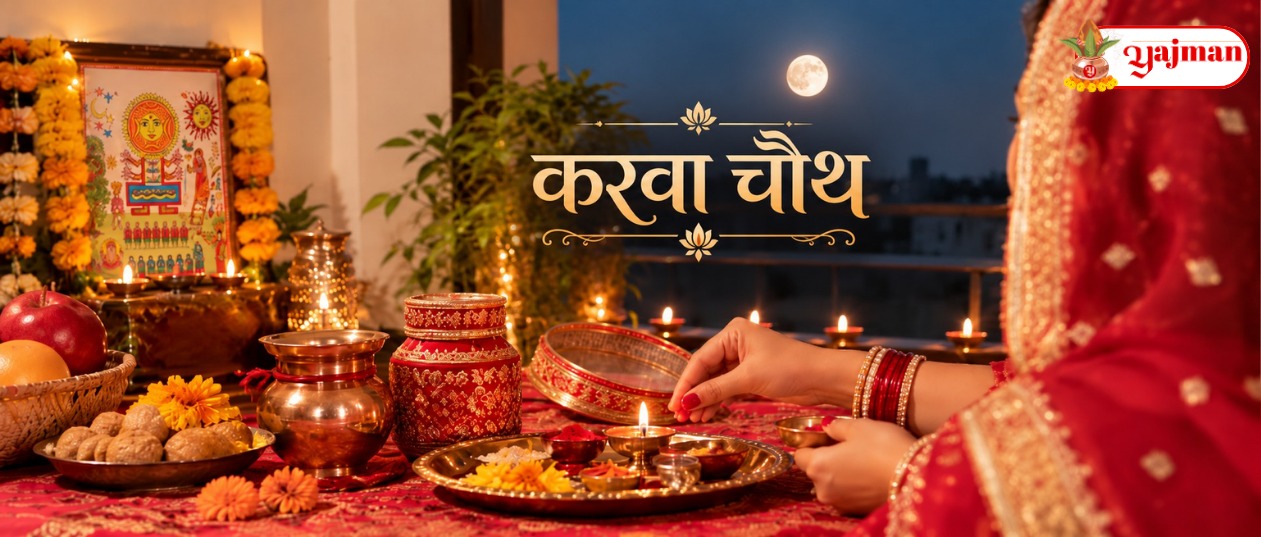
Karwa Chauth is a traditional Hindu festival observed with devotion, prayers and the recitation of the Karwa Chauth Vrat Katha. Among the most widely heard stories is the tale of Veeravati, a woman whose first Karwa Chauth fast takes an unexpected turn because of a mistake made by her loving brothers. Her story reminds devotees of the importance of sincerity, patience and faith in religious observances.
The Traditional Karwa Chauth Katha
Long ago, in a place called Indraprasthapura, there lived a learned Brahmin named Vedasharma with his wife, Leelavati. They had seven sons and one beloved daughter named Veeravati. Being the only sister among seven brothers, she was cherished by her entire family.
As time passed, Veeravati grew up and married a worthy young man. After her marriage, she returned to her parents' home for her first Karwa Chauth. Like the other women in her family, she observed the fast with the hope and devotion traditionally associated with the occasion.
From sunrise, Veeravati remained without food or water, waiting for the moon to appear so that she could complete her vrat. As the day wore on, hunger and thirst began to take their toll. By evening, she had grown so weak that she fainted.
Her seven brothers were deeply distressed to see their beloved sister suffering. They knew how devoted she was to the fast, but they could not bear to watch her struggle any longer. Hoping to help her, they decided to create the appearance of moonrise.
One of the brothers climbed a distant banyan tree and placed a glowing lamp behind a sieve. From afar, the light looked like the rising moon.
When Veeravati regained consciousness, her brothers called her outside and told her that the moon had risen. Trusting them, she looked towards the distant light and believed that the time had come to complete her fast.
She offered her prayers to what she thought was the moon and broke her fast.
However, according to the traditional story, misfortune soon followed. As Veeravati began eating, she encountered a series of ill omens. Before long, news arrived from her in-laws that her husband had died.
Heartbroken, Veeravati rushed to her marital home. Seeing her husband's lifeless body, she was overcome with grief. She could not understand why such a tragedy had occurred on the very day she had observed her first Karwa Chauth vrat with so much devotion.
As she mourned, Goddess Indrani, the wife of Lord Indra, appeared before her. Veeravati pleaded for help and asked why she had suffered such a terrible loss.
Goddess Indrani explained that Veeravati had broken her fast before the actual moonrise and had offered water to a false moon. She advised Veeravati to observe the Chauth fast faithfully every month for a year and then complete the next Karwa Chauth with devotion and the proper rituals.
Holding on to this guidance, Veeravati observed the monthly Chauth fasts with dedication. When the next Karwa Chauth arrived, she performed the observance with renewed faith and sincerity.
According to the traditional katha, the merit of her devotion led to her husband's life being restored. Veeravati and her husband were reunited, and their household was once again filled with happiness.
The story of Veeravati has since been recited in many households during Karwa Chauth, reminding devotees of the significance of faith, patience and sincerity in their religious practices.
The Significance of Karwa Chauth Katha
The story of Veeravati is an important part of the traditional Karwa Chauth observance. It explains why the moonrise ritual and the completion of the vrat hold special meaning in many families.
For devotees, the katha represents the importance of sincere prayer, perseverance and following religious customs with care. It is traditionally associated with prayers for the well-being of one's spouse and the happiness of married life.
The story is part of a living devotional tradition, with variations in its details and ending across different regions and family traditions. Its miraculous events belong to the religious narrative and should not be understood as a guarantee of real-world outcomes.
Karwa Chauth continues to bring families together through prayer, storytelling and shared customs. Reciting the katha allows these traditions to be passed from one generation to the next while keeping their cultural and devotional meaning alive.
The Karwa Chauth Katha of Veeravati and her seven brothers remains a cherished story of faith and devotion. Its enduring place in the festival reminds devotees to approach their religious observances with sincerity and understanding.
As families gather to perform puja, listen to the katha and observe their traditions, the story continues to connect generations through shared beliefs and cultural heritage.
For more devotional stories, mythological kathas and insights into Hindu traditions, visit Yajman App.