

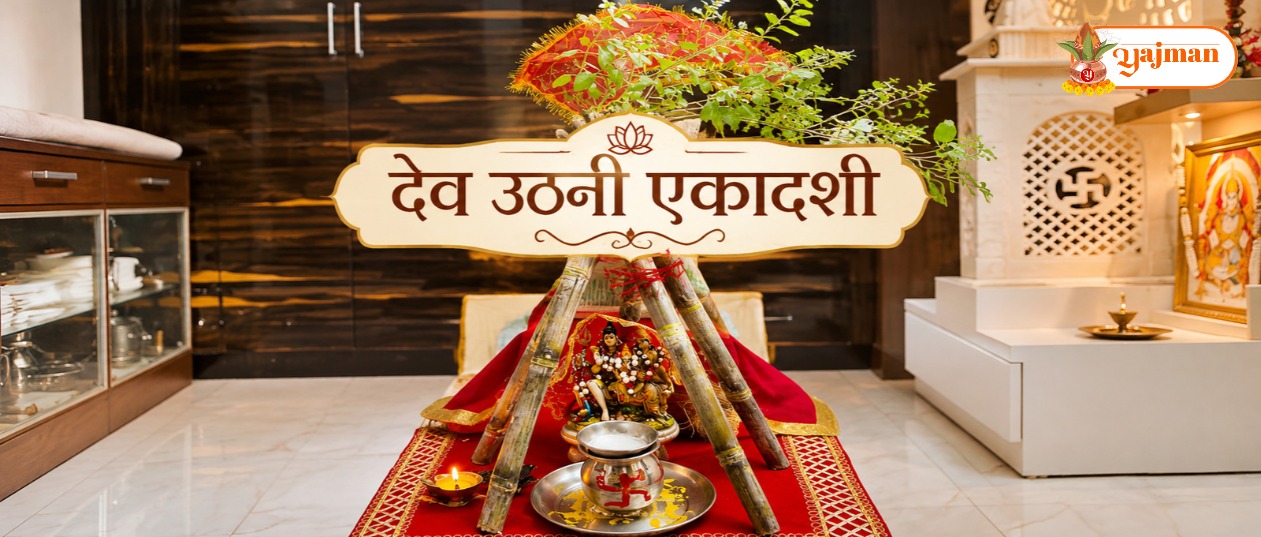
Devuthni Ekadashi, observed on Kartik Shukla Ekadashi, is one of the most sacred dates in the Vedic lunar calendar. Also known as Prabodhini Ekadashi or Dev Uthani Gyaras, this auspicious day marks the divine moment Lord Vishnu awakens from his four-month cosmic slumber (Yoga Nidra) in Ksheera Sagara. His awakening marks the end of Chaturmas, a period dedicated to introspection, fasting, and restraint and reopens the gateway for auspicious ceremonies (manglik karya) such as weddings, housewarmings, and sacred thread initiations across Hindu households. The sacred Devuthni Ekadashi katha not only illuminates cosmic balance but also celebrates the divine union of Tulsi Vivah.
The Scriptural Origin of Vishnu’s Cosmic Slumber
The origin of Lord Vishnu's four-month rest is chronicled in the Uttara Khanda of the Padma Purana, narrated through a revered dialogue between Lord Brahma and Devarshi Narada.
Observing the universe, Goddess Lakshmi once approached Lord Vishnu with a gentle inquiry: "Bhagavan, your sleep pattern brings cosmic unpredictability. At times, you remain awake for thousands of years, keeping the entire cosmos vigilant; at other times, you enter deep slumber for millennia, leaving deities and mortals vulnerable to turmoil. Would it not bring order to creation if your rest followed a predictable rhythm?"
Pleased with her concern for universal equilibrium, Lord Vishnu granted a boon: "Devi, henceforth I shall enter Yoga Nidra for four months every year, beginning from Devshayani Ekadashi in the month of Ashadha until Devuthni Ekadashi in Kartik. During this period of Chaturmas, negative influences seek to disrupt dharma, but those who practice self-discipline, worship and charity during these months shall receive boundless spiritual merit. On Kartik Shukla Ekadashi, I shall awaken to bless the three worlds."
When Devuthni Ekadashi arrives, the Devas gather in celestial celebration, sounding conches and chanting the sacred invocation to awaken the Supreme Preserver:
Uttishtha Uttishtha Govinda Uttishtha Garudadhwaja |
Tvayi Supte Jagannatha Jagat Suptam Idam Bhavet ||
Uttishte Chodbhavet Sarvam Trailokyam Sacharacharam ||
— Padma Purana
"Awaken, O Govinda! Awaken, O Lord whose banner bears Garuda! While you sleep, O Lord of the universe, the entire cosmos rests in dormancy. When you awaken, all three worlds and every moving and unmoving being rise to life and vitality."
The Legend of Tulsi Vivah and the Shaligram Stone
A central spiritual highlight of Devuthni Gyaras is the ceremonial wedding of the holy Tulsi plant with Lord Vishnu, known as Tulsi Vivah. Detailed in the Skanda Purana, this sacred tradition stems from the story of Vrinda, the devoted wife of the demon king Jalandhar.
Because of Vrinda's unwavering purity and devotion, Jalandhar became invulnerable on the battlefield, wreaking havoc across heaven and threatening the Devas. To protect the cosmic order, Lord Vishnu assumed the appearance of Jalandhar before Vrinda, causing her protective vow to break and allowing Shiva to vanquish the tyrant.
When Vrinda discovered the reality, her grief transformed into intense righteous indignation. She cursed Lord Vishnu to turn into a black stone, devoid of emotion. Accepting the curse with deep humility, Lord Vishnu acknowledged that her pure fidelity was unmatched in the three worlds. Before Vrinda entered the sacrificial fire, Bhagavan blessed her:
"Vrinda, your soul shall take the sacred form of the Tulsi plant. I shall forever reside with you in the form of the holy Shaligram stone found in the sacred Gandaki river. No offering made to me by devotees will be complete without a sacred leaf of Tulsi."
From that day forward, Kartik Shukla Ekadashi marks the divine marriage of Tulsi and Shaligram, honoring selfless devotion and eternal purity.
Connecting with these timeless Puranic traditions anchors our homes in authentic spiritual values. For ritual guides, festive muhurats and Vedic kathas, explore Yajman App.
Download Yajman App on Google Play and Apple App Store.
Stay tuned for more stories at Yajman App.